

Testalonga El Bandito Collection
Testalonga El Bandito Collection
Couldn't load pickup availability
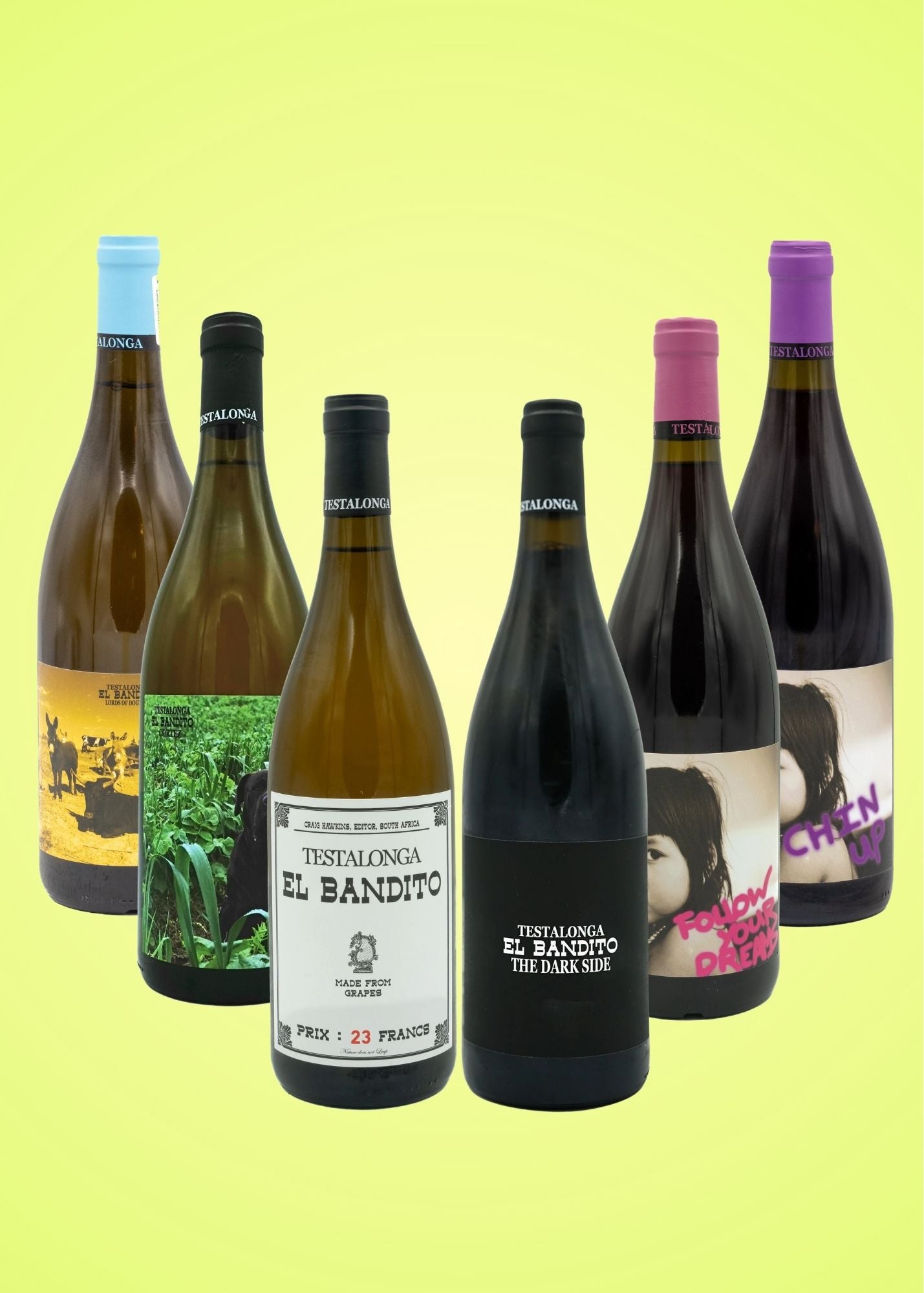
Unbox the best of South Africa's natural wine movement with 6 handcrafted bottles from Bandito Testalonga. Spotlighting crisp whites, skin-contact complexity, and 3 incredibly juicy, chill-friendly reds made for easy sipping and charcuterie boards!
White:
Testalonga El Bandito Lords of Dogtown 2023
A waxy medium-gold colour. There are rays of piercing citrus, fresh grapefruit and baked lemon curd on the nose with a wealth of other aromas. Young, fresh, pure and elegant. Bright apple and mineral flavours with a complexity and persistence that defies its youth.
Testalonga El Bandito Cortez 2023
Single vineyard Chenin planted in 1972. Full malolactic conversion and aged with lees. Fresh, complex, and layered with ripe apple, herbs, earth and mineral notes.
Orange:
Testalonga El Bandito Skin 2023
Chenin from old vines, this is Craig's first wine. 14 days on skins. Beautifully complex and vibrant. Layers of citrus fruits, preserved lemon and cooked apricot and white flowers.
Red:
Testalonga Baby Bandito Follow Your Dreams 2024
An atypical expression of Carignan! This one is light, juicy and vibrant with subtle tannins. Best served lightly chilled with ham and cold cuts.
Testalonga El Bandito The Dark Side 2023
A light take on a South African Syrah. Harvested from a single vineyard, this wine hasn't had much maceration time, giving it a less robust character, whilst maintaining bold fruit notes of blackberry, mulberries and a ripe blueberry finish.
Testalonga Baby Bandito Chin Up 2024
Probably the most refreshing Cinsault to come out of Swartland this year. Fresh dark cherry and dark plum notes with grippy tannins. The acid is what makes it so bright, helping keep each sip just as satisfying as the last.
Share
Organic, Biodynamic and Natural wine. What’s the difference?
To understand this concept and its various ramifications, it is necessary to keep something clear in mind: before the 20th century and the spreading of affordable synthetic fertilisers, all farming was organic. When the shift to the use of synthetics and pesticides happened, it became necessary to diversify traditional organic farming from the new modern farming.
ORGANIC WINE
Simply put, organic farming forbids the use of synthetic fertilisers, synthetic pesticides, herbicides, or genetically modified organisms. The basic requirements are generally specific and engage the farmers not to use any chemical fertilisers and other synthetic products in the vineyard. It does not prevent the vintner from using the conventional winemaking process after harvesting.
BIODYNAMIC WINE
Let’s take organic farming one step further: Biodynamic. The creator of this agricultural system is the Austrian philosopher Rudolf Steiner, who developed the principles of biodynamics in a series of lectures given in 1924 in Germany. Here lies the foundation of true organic wines, with a strict limit in the use of additives, stringent requirements and at the end obtaining a biodynamic certification.
NATURAL WINE
The previous definitions are usually, and rightfully, associated with it, because most natural wine is also organic and/or biodynamic. But not vice versa!
Natural wine is wine in its purest form, simply described as nothing added, nothing taken away, just grapes fermented. No manipulation whatsoever, minimal intervention both in the vineyards and in the winery. Healthy grapes, natural yeast and natural fermentation, with no filtration nor fining. Sounds easy, right? However, making natural wine is unforgiving and it requires a bigger amount of work than conventional wine. To this day, natural wine has no certification yet.