

Cantillon box: Sang Bleu, Rosé de Gambrinus, Kriek, Gueuze, Grand Cru Bruocsella & Graal
Cantillon box: Sang Bleu, Rosé de Gambrinus, Kriek, Gueuze, Grand Cru Bruocsella & Graal
Couldn't load pickup availability
LIMITED SALES CANTILLON BUNDLE
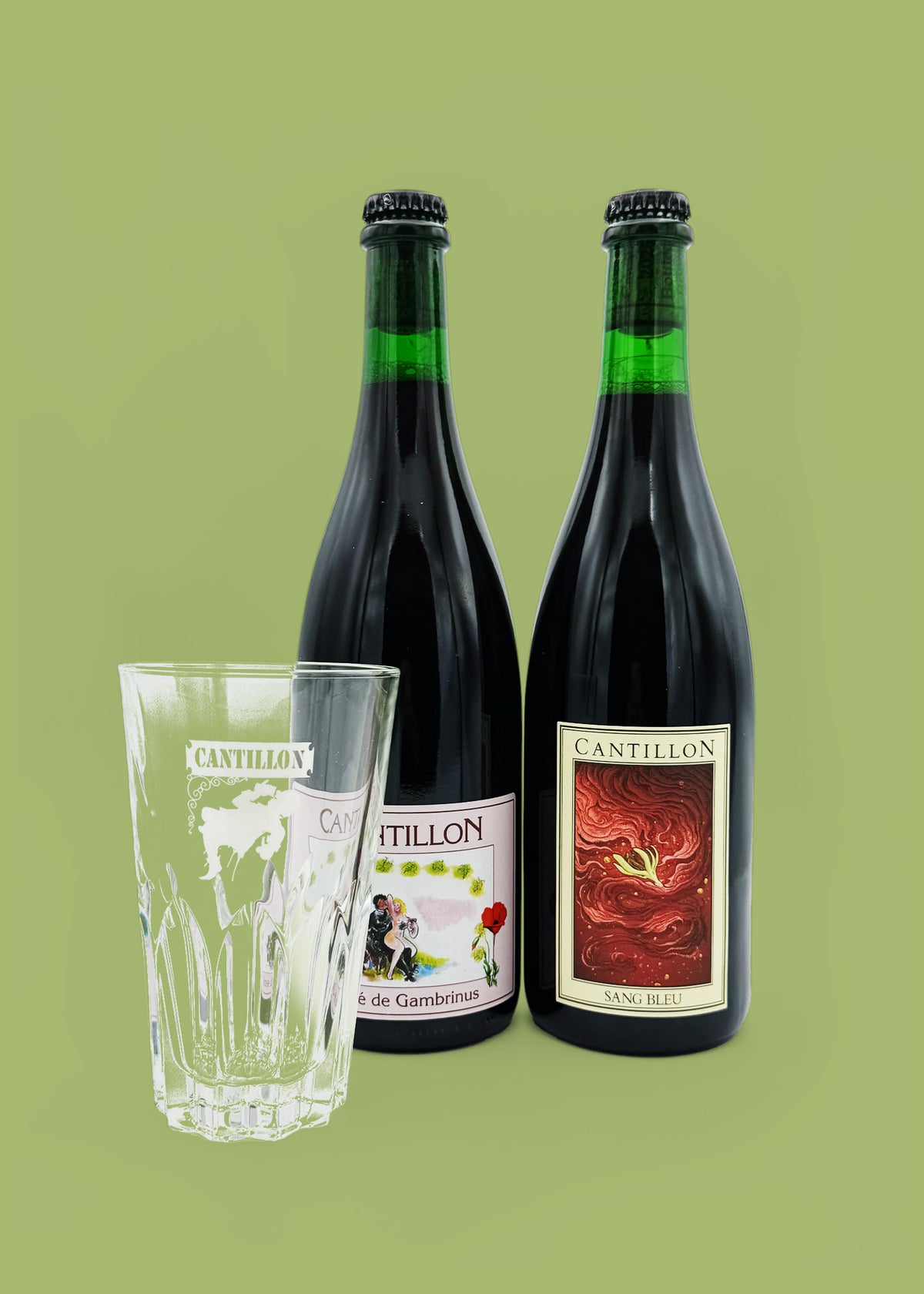
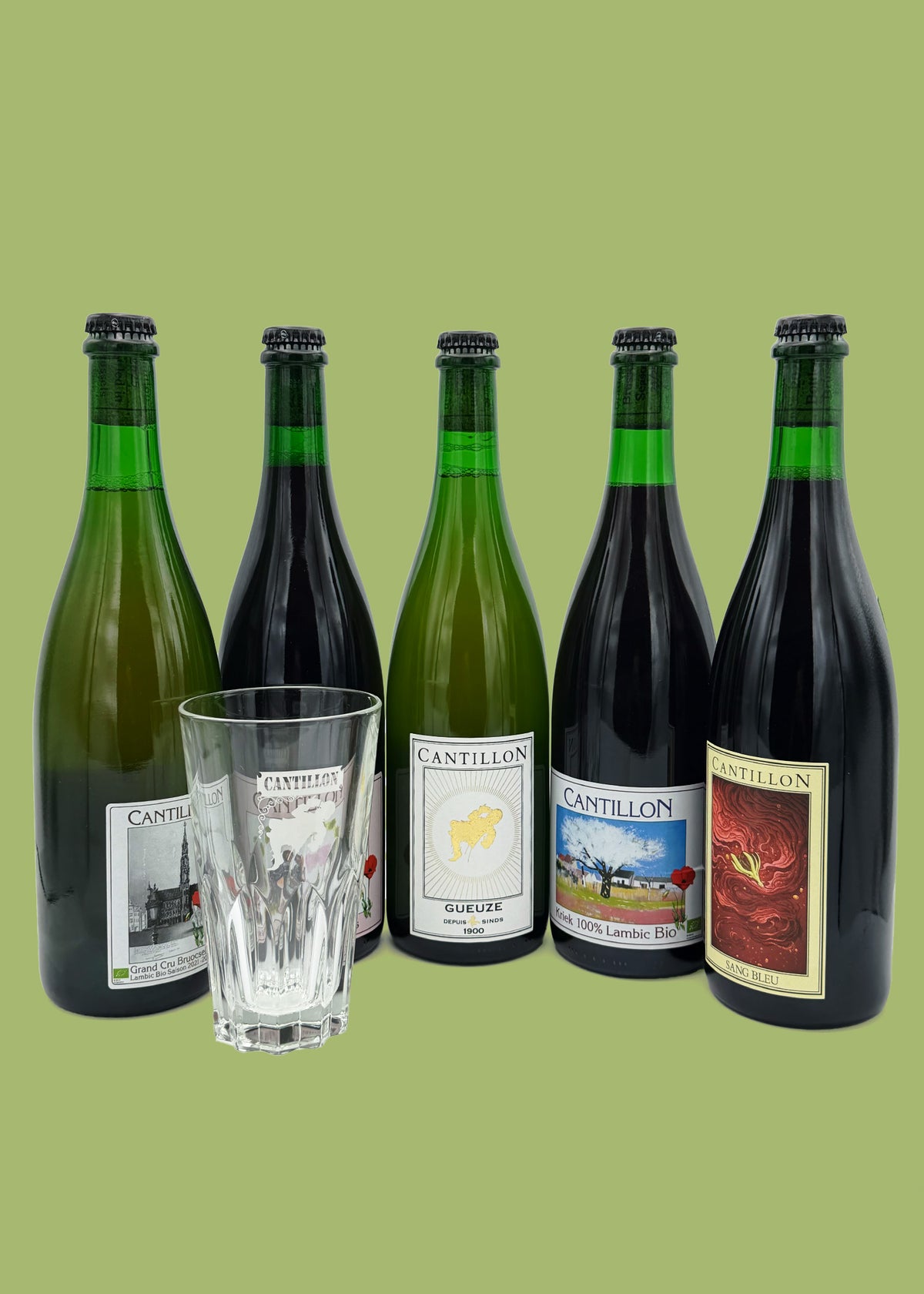
5 Cantillon beers with 3 Fruit Lambics and 2 Classics + 1 Cantillon Graal Gueuze glass!
BREWER Cantillon
In the Ultimate Bundle box:
1 Sang Bleu 2026 (New Arrival): Lambic blend with blue honeysuckle, or haskap, berries. For the past two years, we’ve been making a fruited blend with Camerise berries in small quantities. These berries are slightly sweet with a beautiful acidity. We didn’t have to look very far for a its new name... a blue fruit that makes a blood-red beer: Sang Bleu. Our friend Ammo has outdone himself once again, creating a superb new label to go with its new name.
1 Rosé de Gambrinus 2026 (New Arrival): Blend of lambics and raspberries - 200 g of raspberries per litre of beer. Beer with a slightly acidic, fruity and fragrant taste. Just like kriek, the “fruitiness” of Rosé de Gambrinus is at its best when the beer is young. With age the lambic will take the upper hand, but this is at the expense of the fruit component.
1 Kriek 2025 (Aged in Cellar): Blend of lambics and sour cherries - 200 g of cherries per litre of beer. Beer with a slightly acidic taste of red fruit complemented with subtle almond flavours. Kriek brings out its maximum “fruitiness” when drunk young. With age the lambic will take the upper hand, but this is at the expense of the fruit component.
1 Grand Cru Bruocsella 2025 (Aged in Cellar): Vintage lambic. All the beers are from the same brewing season and mature in barrels for three years. Beer with a highly complex structure that has a wine-like and somewhat oxidised taste, the slightly acidic structures mingling with more mellow aspects. Powerful yet elegant, Bruocsella can be considered the missing link between the worlds of wine and beer. Since there is no secondary fermentation in the bottle Bruocsella is a flat, non-sparkling beer.
1 Gueuze 2025 (Aged in Cellar): Blend of lambics produced during different years. Beer with a slightly acidic and fruity taste, delicate and woody fragrance and a dry finish that lingers on the palate. Beer with taste evolution that will keep for a long time in a good cellar.
1 Cantillon Glassware Graal 330ml
In our New Arrivals Bundle:
1 Sang Bleu 2026 (New Arrival) + 1 Rosé de Gambrinus 2026 (New Arrival) + 1 Cantillon Glassware Graal 330ml
Lambic is a traditional Belgian beer style defined by spontaneous fermentation. No lab-selected yeast, no controlled inoculation. Instead, the wort is left exposed to the air, allowing wild yeasts and bacteria from the local environment to kick off fermentation. Lambics are brewed with barley, wheat, and aged hops (usually Hallertau), which contribute very little bitterness. After brewing, the beer is aged in wooden casks sometimes for several years.
Share
Organic, Biodynamic and Natural wine. What’s the difference?
To understand this concept and its various ramifications, it is necessary to keep something clear in mind: before the 20th century and the spreading of affordable synthetic fertilisers, all farming was organic. When the shift to the use of synthetics and pesticides happened, it became necessary to diversify traditional organic farming from the new modern farming.
ORGANIC WINE
Simply put, organic farming forbids the use of synthetic fertilisers, synthetic pesticides, herbicides, or genetically modified organisms. The basic requirements are generally specific and engage the farmers not to use any chemical fertilisers and other synthetic products in the vineyard. It does not prevent the vintner from using the conventional winemaking process after harvesting.
BIODYNAMIC WINE
Let’s take organic farming one step further: Biodynamic. The creator of this agricultural system is the Austrian philosopher Rudolf Steiner, who developed the principles of biodynamics in a series of lectures given in 1924 in Germany. Here lies the foundation of true organic wines, with a strict limit in the use of additives, stringent requirements and at the end obtaining a biodynamic certification.
NATURAL WINE
The previous definitions are usually, and rightfully, associated with it, because most natural wine is also organic and/or biodynamic. But not vice versa!
Natural wine is wine in its purest form, simply described as nothing added, nothing taken away, just grapes fermented. No manipulation whatsoever, minimal intervention both in the vineyards and in the winery. Healthy grapes, natural yeast and natural fermentation, with no filtration nor fining. Sounds easy, right? However, making natural wine is unforgiving and it requires a bigger amount of work than conventional wine. To this day, natural wine has no certification yet.